PhD Proposal Defense:
Electric Vehicle Smart Charging Adoption,
Grid Peak-Shaving Quantification, and
The surveydown Survey Platform


Pingfan Hu
George Washington University

EV sales in US reaching ~10% of sales

Source: Argonne National Lab, www.anl.gov/ev-facts/model-sales

Introduction

  • Unmanaged BEV charging is becoming a problem to the grid.
  • Managed charging is cheaper and smoothes out the grid load.
  • Smart charging: Supplier-Managed Charging (SMC) and Vehicle-to-Grid (V2G).

SMC - Supplier Managed Charging

  • SMC smooths out EV charging spike (called “Peak-shaving”).
  • Electricity demand is controlled below capacity threshold.
  • It saves money and reduces pollution.

SMC - Supplier Managed Charging

  • SMC smooths out EV charging spike (called “Peak-shaving”).
  • Electricity demand is controlled below capacity threshold.
  • It saves money and reduces pollution.

V2G - Vehicle-to-Grid

Smart charging effectiveness depends on
enrollment and peak-shaving.

Three Inter-connected Studies


Survey Research & Modeling

Electric Vehicle Smart Charging Adoption


Simulation Research

Grid Peak-Shaving Quantification

Software Development

The surveydown Survey Platform

Study 1
Electric Vehicle Smart Charging Adoption


Under second round of reviews:


Hu, Pingfan, Tarroja, B., Dean, M., Forrest, K., Hittinger, E., Jenn, A. & Helveston, J.P. (2024) “Measuring Electric Vehicle Owners’ Willingness to Participate in BEV Smart Charging Programs” Environmental Research Letters.

Prior studies have few EV owners in sample

  1. A survey-based study by Wong et al. (2023) examined incentives effect on EV owners’ acceptance, but EV ownership in sample was only 19%.
  2. A survey-based study by Philip and Whitehead (2024) found range anxiety matters, but EV ownership in sample was only 1.28%.
  3. A survey-based study by Huang et al. (2021) indicates the importance of fast charging, but the sample size was only 157.


We need high EV ownership & large sample size.

Research Questions

  1. Sensitivity: How do changes in smart charging program features influence BEV owners’ willingness to opt in?

  2. Enrollment Rate: Under what combinations of features will BEV owners be more willing to opt in to smart charging programs?


Conjoint survey to collect BEV owners’ willingness.

Mixed logit model for utility simulations.

Survey Design


Conjoint Questions

  1. Monetary Incentives
  2. Charging Limitations
  3. Flexibility

Demographic Questions

  1. BEV Ownership
  2. Personal Info
  3. Household Info

Conjoint Question Explained

A Sample Conjoint Question

  1. Provide respondents with different sets of attributes.
  2. Observe choices across random sets.
  3. Estimate utility of each attribute.

SMC Programs

Attributes

No. Attributes Range
1 Enrollment Cash $50 to $300
2 Monthly Cash $2 to $20
3 Monthly Override 0 to 5
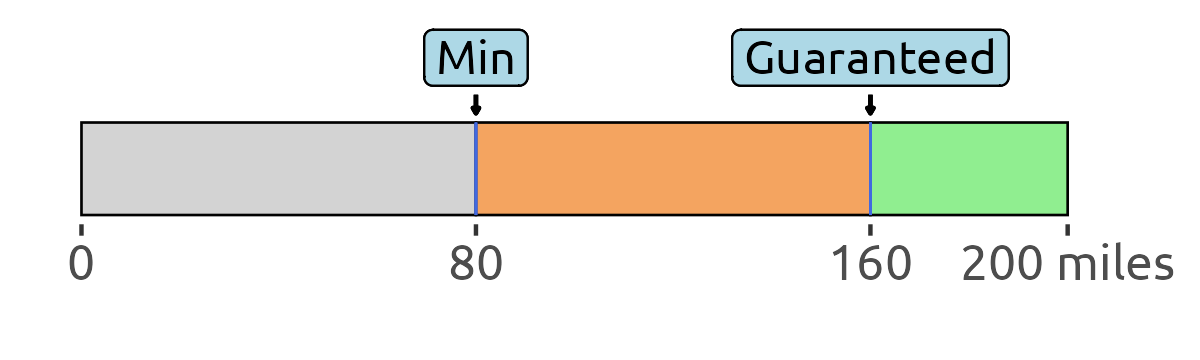
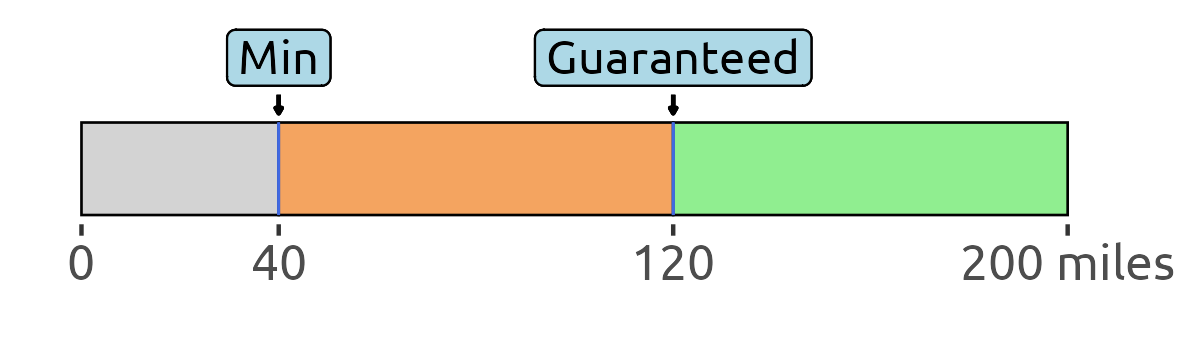
4 Min Battery 20% to 40%
5 Guaranteed Battery 60% to 80%

Sample Program

Attributes Values
Enrollment Cash $300
Monthly Cash $20
Monthly Override 5

(Range determined by stated vehicle they own)

V2G Programs

Attributes

No. Attributes Range
1 Enrollment Cash $50 to $300
2 Occurrence Cash $2 to $20
3 Monthly Occurrence 1 to 4
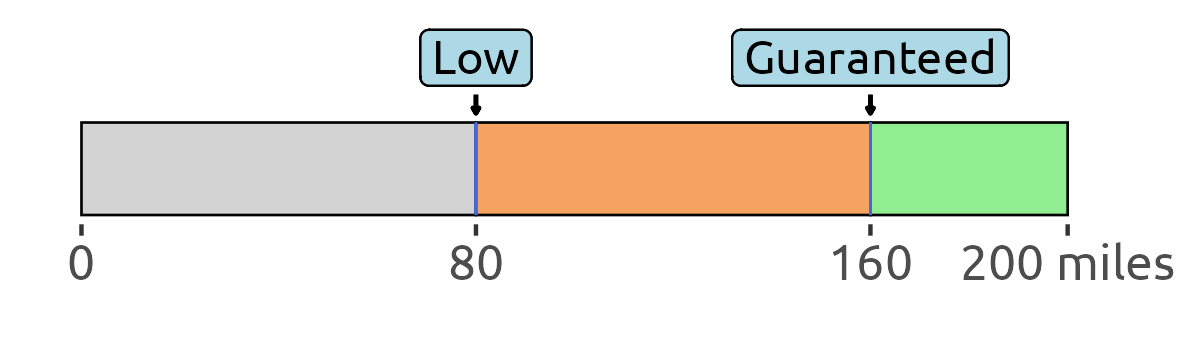
4 Lower Bound 20% to 40%
5 Guaranteed Battery 60% to 80%

Sample Program

Attributes Values
Enrollment Cash $300
Occurrence Cash $20
Monthly Occurrence 1

(Range determined by stated vehicle they own)

Sample SMC Question

Sample V2G Question

Survey Fielding - 1,356 in Total

Meta Ads: Voluntary participants

  • 803 responses
  • March to July in 2024

Dynata Recruitment: Paid survey

  • 553 responses
  • September to November in 2024

Survey Question - Car Ownership

Survey Results - Top 10 BEV

Survey Results - Demographics

Survey Results - Willingness to Participate

Mixed Logit Models

\[ \small \begin{align*} u_j = v_j + \epsilon_j = \beta' x + \epsilon_j \qquad P_j = \frac{e^{v_j}}{\sum_{k=1}^{J} e^{v_k}} \end{align*} \]

Utility esimated using maximum likelihood estimation (MLE).

SMC Estimates

V2G Estimates

Without compensation, users will not participate.

Enrollment Sensitivity

Baseline Simulation

Choice between “None” and this program:

Attributes Values
Enrollment Cash $0
Monthly Cash $0 - $20
Monthly Override 0

Sensitivity Plot

Enrollment Sensitivity

  1. Steeper slope indicates higher sensitivity.
  2. Diminishing returns exist.

Equivalencies of 5% Enrollment Increase


SMC

Attribute Equivalence Value Unit
Enrollment Cash 77.7 $
Monthly Cash 4.0 $
Override Days 2.5 Days
Minimum Threshold 65.5 %
Guaranteed Threshold 6.3 %

V2G

Attribute Equivalence Value Unit
Enrollment Cash 55.7 $
Occurrence Cash 2.9 $
Monthly Occurrence 1.9 Times
Lower Bound 11.7 %
Guaranteed Threshold 9.1 %


  1. Smaller value indicates higher efficiency.
  2. Monetary incentives are valued more in V2G than SMC.
  3. Guaranteed thresholds are in high efficiency, indicating range anxiety.
  4. Attribute equivalencies can be used to inform incentive design.

Study 2

Quantifying the supply of peak-shaving from controlled EV charging

Recall the SMC Peak-shaving

  • SMC smooths out EV charging spike (called “Peak-shaving”).
  • Electricity demand is controlled below capacity threshold.
  • It saves money and reduces pollution.

Research Questions

  1. Peak-shaving: How much does peak-shaving from controlled EV charging cost utilities?

  2. Variations: How do peak-shaving results change based on regions, seasons, EV-to-house ratios, and enrollment rates.


Data collection from NHTS, NREL, and U.S. Census.

Peak-shaving simulation using model from study 1.

Plan of Action

Step 1: Data Collection

  • NHTS: Charging behavior data
  • NREL: Household electricity consumption data
  • U.S. Census: Count of single family households
  • Study 1: MXL model of SMC enrollment utilities

Step 2: Simulation

  • Simulate grid demand profiles with different EV charging loads
  • Simulate peak load reduction under different levels of SMC enrollment

Step 3: Sensitivity Analysis

  • Compare the peak-shaving results of different scenarios
  • Summarize and provide policy implications

NHTS - National Household Travel Survey


Travel patterns of 26,000 vehicle owners.

Simulated EV Charging Profile

Energy consumption and concurrent charging % of 10,000 EVs.

NREL - National Renewable Energy Lab


Data of household electricity consumption in each GEA region.

18 GEA Regions

CAISO as an Example

7.69M single-family homes, collected from U.S. Census.

Peak-shaving Simulation

Original Consumption Profile


Assumptions

  • 200-mile range BEV.
  • Level 2 charger.
  • Peak: 10AM-12:00AM.
  • Valley: 12:00AM-7AM.
  • Battery: 20%-80%.
  • Auto-override.

Shifted Consumption with Peak-shaving


90% SMC enrollment, EV-to-house ratio 1:1.


Assumptions

  • 200-mile range BEV.
  • Level 2 charger.
  • Peak: 10AM-12:00AM.
  • Valley: 12:00AM-7AM.
  • Battery: 20%-80%.
  • Auto-override.

MXL Model of Monthly Incentives

EV Peak Increase vs Monthly Incentives

More incentives lead to higher SMC enrollment, thus more peak shaving.

Sensitivity Analysis

Different Scenarios

  • All 18 GEA regions in all 4 seasons.
  • Varying EV-to-house ratios (1:4, 1:2, 1:1).
  • Varying SMC enrollment rates (from 0% to 100%).
  • Varying peak and valley windows.

Policy Implications

  1. Utilities must plan a budget that scales with enrollment levels.
  2. Governments could get engaged (e.g. provide subsidies to offset the cost).

Study 3
The surveydown Survey Platform


Published in PLoS ONE:


Hu, Pingfan, Bunea, Bogdan, & Helveston, J. P. (2025). “surveydown: An open-source, markdown-based platform for programmable and reproducible surveys” PLOS ONE, 20(8), e0331002. https://doi.org/10.1371/journal.pone.0331002

Typical Web Survey

Google Form - GUI Interface

Limitations


❌ Reproduciblity

❌ Version control

❌ Limited features

❌ Open source

Qualtrics - Commercial Platform

Expensive!


Why not make surveys from code?

Limitations
Features

✅ Reproducibility

✅ Version control

✅ Lots of features

✅ Open source

✅ Free!

Introducing surveydown!


R package that renders Quarto files into surveys


Quarto is a publishing system


Original qmd file


Markdown + R code chunks

---
format: html
title: "HTML Page with R Code"
---

# Hello, World!

This is a simple **HTML** page with *R* code.

```{r}
library(ggplot2)

df <- data.frame(x = rnorm(100))
ggplot(df, aes(x = x)) +
  geom_histogram()
```

Rendered HTML


Original qmd file


Markdown + Python code chunks

---
format: pdf
title: "PDF File with Python Code"
---

# Hello, World!

This is a simple **PDF** file with *Python* code.

```{python}
import matplotlib.pyplot as plt
import numpy as np

data = np.random.normal(0, 1, 100)
plt.hist(data)
plt.show()
```

Rendered PDF


survey.qmd

---
format: html
echo: false
warning: false
---

```{r}
library(surveydown)
```

::: {#welcome .sd-page}

# Welcome to `surveydown`!

```{r}
sd_question(
  type  = "mc",
  id    = "has_fav_hero",
  label = "Do you have a favorite super hero?",
  option = c(
    "Yes" = "yes",
    "No"  = "no"
  )
)

sd_next()
```

:::

Rendered Survey


survey.qmd

---
format: html
echo: false
warning: false
---

```{r}
library(surveydown)
```

::: {#welcome .sd-page}

# Welcome to `surveydown`!

```{r}
sd_question(
  type  = "mc",
  id    = "has_fav_hero",
  label = "Do you have a favorite super hero?",
  option = c(
    "Yes" = "yes",
    "No"  = "no"
  )
)

sd_next()
```

:::

YAML header for a “clean” output

survey.qmd

---
format: html
echo: false
warning: false
---

```{r}
library(surveydown)
```

::: {#welcome .sd-page}

# Welcome to `surveydown`!

```{r}
sd_question(
  type  = "mc",
  id    = "has_fav_hero",
  label = "Do you have a favorite super hero?",
  option = c(
    "Yes" = "yes",
    "No"  = "no"
  )
)

sd_next()
```

:::

Load the surveydown Package

survey.qmd

---
format: html
echo: false
warning: false
---

```{r}
library(surveydown)
```

::: {#welcome .sd-page}

# Welcome to `surveydown`!

```{r}
sd_question(
  type  = "mc",
  id    = "has_fav_hero",
  label = "Do you have a favorite super hero?",
  option = c(
    "Yes" = "yes",
    "No"  = "no"
  )
)

sd_next()
```

:::

Use Quarto fences (:::)

to define survey pages

survey.qmd

---
format: html
echo: false
warning: false
---

```{r}
library(surveydown)
```

::: {#welcome .sd-page}

# Welcome to `surveydown`!

```{r}
sd_question(
  type  = "mc",
  id    = "has_fav_hero",
  label = "Do you have a favorite super hero?",
  option = c(
    "Yes" = "yes",
    "No"  = "no"
  )
)

sd_next()
```

:::

Page content

  • Markdown for texts, images, etc.
  • sd_question() for survey questions
  • sd_next() for page navigation

survey.qmd

---
format: html
echo: false
warning: false
---

```{r}
library(surveydown)
```

::: {#welcome .sd-page}

# Welcome to `surveydown`!

```{r}
sd_question(
  type  = "mc",
  id    = "has_fav_hero",
  label = "Do you have a favorite super hero?",
  option = c(
    "Yes" = "yes",
    "No"  = "no"
  )
)

sd_next()
```

:::

Rendered Survey


survey.qmd

---
format: html
echo: false
warning: false
---

```{r}
library(surveydown)
```

::: {#welcome .sd-page}

# Welcome to `surveydown`!

```{r}
sd_question(
  type  = "mc",
  id    = "has_fav_hero",
  label = "Do you have a favorite super hero?",
  option = c(
    "Yes" = "yes",
    "No"  = "no"
  )
)

sd_next()
```

:::

Rendered Survey

Quarto renders to static html pages.
Shiny turns them interactive.


A complete surveydown survey


survey.qmd

A Quarto doc defining the survey content (pages, texts, images, questions, etc).

app.R

An R script defining the survey Shiny app.

PostgreSQL for response data storage.


supabase.com

Technologies of surveydown


surveydown is feature-packed!

surveydown is highly flexible and customizable to user needs

Randomization: Conjoint question


Shiny compatibility: leaflet map

surveydown vs other platforms


Star Count on GitHub

surveydown.org

Research Contributions


  • Study 1: First large N survey study of EV owner preference sensitivities to smart charging. Introduces attribute equivalencies for incentive design.
  • Study 2: Quantifies grid supply curves for peak-shaving, considering regions, seasons, EV-to-house ratios, and enrollment rates.
  • Study 3: surveydown, a free open-source survey platform for programmable, reproducible survey designs.

Timeline of Study 2

  • Nov 2025: Sensitivity analysis on various scenarios.
  • Dec 2025: Complete & submit manuscript for peer review.
  • Mar 2026: Defend dissertation.

Thanks for listening!

Appendix

SMC Scenario Analysis

  1. Flexibility is highly valued.
  2. Recurring incentives are more important than one-time.
  3. Payment alone is not enough.

V2G Scenario Analysis

  1. Still, recurring incentives are more important than one-time.
  2. But flexibility is not as important compared with SMC.
  3. Owners are willing to leverage BEV as a source of income.

Smart Charging Enrollment Simulator

SMC Logit Model

\[ \begin{align*} u_j = \beta_1 x_j^{\text{enroll_cash}} + \beta_2 x_j^{\text{monthly_cash}} + \beta_3 \delta_j^{\text{override_allowed}} + \beta_4 x_j^{\text{num_overrides}} \notag \\ + \beta_5 x_j^{\text{min_threshold}} + \beta_6 x_j^{\text{guaranteed_threshold}} + \beta_7 \delta_j^{\text{no_choice}} + \epsilon_j \end{align*} \]

Attribute Coef. Est. SE Level Unit
Enrollment Cash β₁ 0.0037 0.0002 50, 100, 200, 300 USD
Monthly Cash β₂ 0.0728 0.0031 2, 5, 10, 15, 20 USD
Override Days β₃ 0.1191 0.0140 0, 1, 3, 5 Days
Override Flag β₄ 0.4357 0.0654 Yes, No -
Minimum Threshold β₅ 0.0044 0.0023 20, 30, 40 %
Guaranteed Threshold β₆ 0.0490 0.0028 60, 70, 80 %
No Choice β₇ 2.8984 0.2215 - -

V2G Logit Model

\[ \begin{align*} u_j = \beta_1 x_j^{\text{enroll_cash}} + \beta_2 x_j^{\text{occur_cash}} + \beta_3 x_j^{\text{num_occurrences}} + \beta_4 x_j^{\text{lower_threshold}} \notag \\ + \beta_5 x_j^{\text{guaranteed_threshold}} + \beta_6 \delta_j^{\text{no_choice}} + \epsilon_j \end{align*} \]

Attribute Coef. Est. SE Level Unit
Enrollment Cash β₁ 0.0051 0.0003 50, 100, 200, 300 USD
Occurrence Cash β₂ 0.0972 0.0045 2, 5, 10, 15, 20 USD
Monthly Occurrence β₃ 0.1595 0.0262 1, 2, 3, 4 Times
Lower Threshold β₄ 0.0263 0.0036 20, 30, 40 %
Guaranteed Threshold β₅ 0.0368 0.0037 60, 70, 80 %
No Choice β₆ 2.4283 0.1964 - -

surveydown Feature Highlights


Question types

Conditional logic

12 Built-in Question Types

text

textarea

numeric

mc

mc_multiple

mc_buttons

mc_multiple_buttons

select

slider

slider_numeric

date

daterange

Question Type: text


sd_question(
  type  = "text",
  id    = "fav_hero_name",
  label = "Who is your favorite super hero?"
)


–>

Question Type: mc_buttons


sd_question(
  type  = "mc_buttons",
  id    = "dream_power",
  label = "If you could have ONE superpower?",
  option = c(
    "🕸️ Web-slinging"   = "webslinging",
    "🛡️ Super Strength" = "strength",
    "✈️ Flight"         = "flight",
    "🧠 Telepathy"      = "telepathy",
    "⚡️ Super Speed"    = "speed"
  ),
  direction = "vertical"
)


–>

Conditional logic


Conditional showing

Conditional skipping

Conditional stopping

Conditional showing - sd_show_if()


Conditional showing - sd_show_if()


survey.qmd

# Conditional Question
sd_question(
  type  = "mc",
  id    = "has_fav_hero",
  label = "Do you have a favorite hero?",
  option = c("Yes" = "yes", "No" = "no")
)

# Target Question
sd_question(
  type  = "text",
  id    = "fav_hero",
  label = "Who is your favorite super hero?"
)

app.R

# Inside server
sd_show_if(
  input$has_fav_hero == "yes" ~ "fav_hero"
)

Condition ~ Target


“If {condition}, then show {target}”

Generate surveys with LLMs!

The companion sdstudio package

The companion sdstudio package

The companion sdstudio package

Reference List

Huang, Bing, Aart Gerard Meijssen, Jan Anne Annema, and Zofia Lukszo. 2021. “Are Electric Vehicle Drivers Willing to Participate in Vehicle-to-Grid Contracts? A Context-Dependent Stated Choice Experiment.” Energy Policy 156 (September): 112410. https://doi.org/10.1016/j.enpol.2021.112410.
Philip, Thara, and Jake Whitehead. 2024. Consumer Preferences Towards Electric Vehicle Smart Charging Program Attributes: A Stated Preference Study. Rochester, NY. https://doi.org/10.2139/ssrn.4812923.
Wong, Stephen D., Susan A. Shaheen, Elliot Martin, and Robert Uyeki. 2023. “Do Incentives Make a Difference? Understanding Smart Charging Program Adoption for Electric Vehicles.” Transportation Research Part C: Emerging Technologies 151 (June): 104123. https://doi.org/10.1016/j.trc.2023.104123.